Contact
Positions
Professor
- Organization:
- West Virginia University School of Medicine
- Department:
- Human Performance - Physical Therapy
- Classification:
- Faculty
Associate Professor
- Organization:
- West Virginia University School of Medicine
- Department:
- Department of Neuroscience
- Classification:
- Faculty
Associate Professor
- Organization:
- West Virginia University School of Medicine
- Department:
- Rockefeller Neuroscience Institute (SOM)
- Classification:
- Faculty
Education
- PhD, University of Alberta, Edmonton, AB, Canada
Publications
Additional Info
Additional Links
Dr. Gritsenko personal page: www.hsc.wvu.edu/wvucn/Faculty
Dr. Gritsenko lab: https://sites.google.com/site/neuroengrehab/
West Virginia Chapter of the Society for Neuroscience: https://www.medicine.hsc.wvu.edu/neuroscience/about-us/community-outreach/northern-west-virginia-chapter-of-the-society-for-neuroscience/
About Valeriya Gritsenko
Dr. Valeriya Gritsenko is an Associate Professor in the Division of Physical Therapy and the Department of Neuroscience at the West Virginia University School of Medicine, with adjunct appointments in Mechanical and Aerospace Engineering and Chemical and Biomedical Engineering. She earned her Ph.D. in Neuroscience from the University of Alberta and completed postdoctoral training at the University of Montreal, where she conducted experimental and computational research on sensorimotor integration and goal-directed movement. Since establishing her research program at WVU in 2011, Dr. Gritsenko has developed an internationally recognized multidisciplinary program in neuromechanics, sensorimotor control, and neurorehabilitation. Her work has been supported by competitive funding from NASA, the National Institutes of Health, the National Science Foundation, and the U.S. Department of Defense.
Dr. Gritsenko’s scholarship bridges experimental neuroscience, biomechanics, computational modeling, and rehabilitation engineering to advance the understanding of human movement in health, injury, and disease. Her research program combines experimental and data-driven approaches to investigate sensorimotor control and develop innovative technologies for neurorehabilitation and human performance. She has authored numerous peer-reviewed publications, contributed to patented technologies, and founded the university spin-off company Neurowired to translate scientific discoveries into clinical and technological applications.
Beyond her research contributions, Dr. Gritsenko is a dedicated educator and mentor who has trained undergraduate, graduate, and doctoral students pursuing careers in academia, healthcare, engineering, and industry. She actively contributes to the scientific community through service on NIH and Department of Defense grant review panels, editorial leadership as an Associate Editor for IEEE Transactions on Neural Systems and Rehabilitation Engineering (TNSRE), and neuroscience outreach and advocacy through her leadership of the West Virginia Chapter of the Society for Neuroscience.
Additional Info
Additional Education:
Postdoctoral Fellowship - University of Montreal, Montreal, QC, Canada
Certificate, Intensive course in transcranial magnetic simulation - Harvard Medical School, Boston, MA
Fellowship in Methods in Computational Neuroscience - Marine Biological Laboratory, Woods Hole, MA
Academic Mentor - NSF Innovation Corps
Fellowship, Boosting Spaceflight Underrepresented Researcher Equity (B-SURE) - Translational Research Institute for Space Health (TRISH)
Research Program
Neuroscience
Research Interests
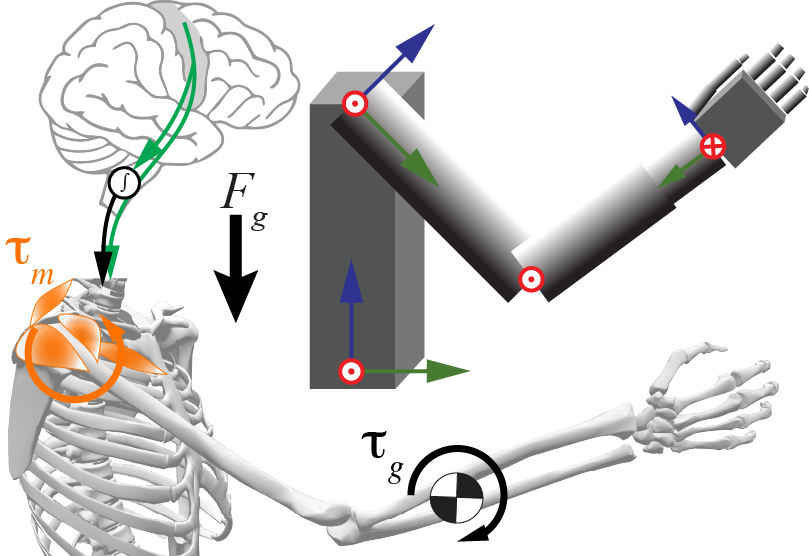
Dr. Gritsenko’s research focuses on the neuromechanics of human movement, sensorimotor control, neurorehabilitation, and computational neuroscience. Her laboratory develops experimental and artificial intelligence–driven approaches to quantify motor function, understand neural control of movement, and improve rehabilitation outcomes following neurological or musculoskeletal injury. Current projects include multimodal neural simulations, wearable and motion-capture technologies for quantitative assessment of movement, biomimetic models of motor control, and AI-powered systems for autonomous assessment of sensorimotor function. Her translational research spans applications in rehabilitation engineering, prosthetics, robotics, aerospace health, and remote patient monitoring.